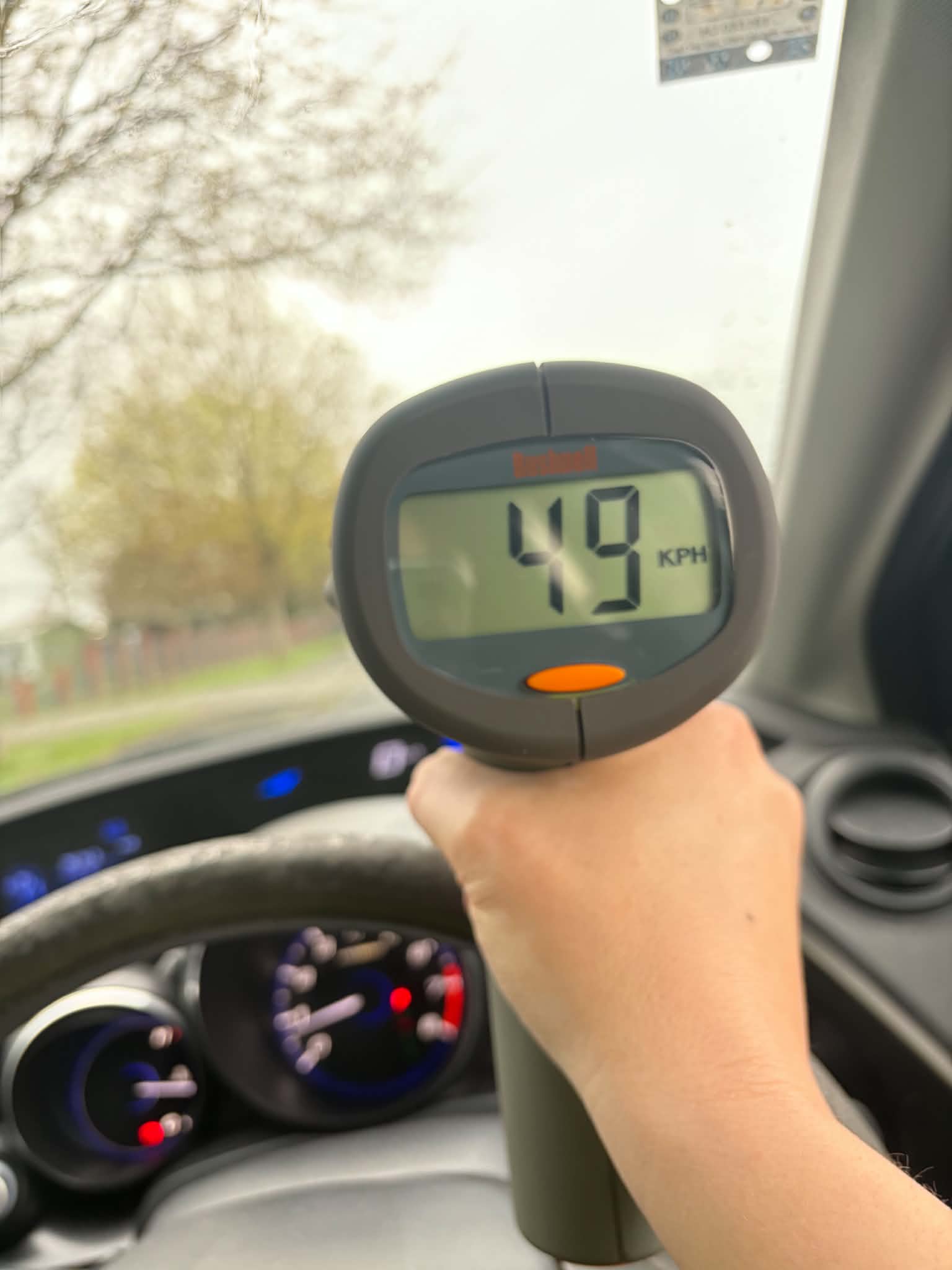
Why are you not slowing down outside our schools?
Media release:
FOR IMMEDIATE RELEASE | Monday 5 October 2026
The 30 is posted. The children are there. Term 4 starts Monday 12 October, and there is just no excuse.
Drivers are still speeding past Wairarapa school gates, and the Wairarapa Road Safety Council has one question for them: why are you not slowing down?
Term 4 begins on Monday 12 October. Children across the region will be back on footpaths, crossings, bikes and scooters. It is one of the busiest times of the year for everybody, and drivers and children alike are still adjusting to daylight saving.
The Council has been working with Police to monitor ongoing speed concerns outside schools across Wairarapa. Too many drivers are still not slowing down.
"Term 4 is one of the busiest times of the year for everybody. Busy is not an excuse. Running late is not an excuse. There is just no excuse," says Holly Hullena of the Wairarapa Road Safety Council.
"These are some of our most vulnerable road users. So I will ask the question plainly: why are you not slowing down?"
What the variable speed signs mean
A variable speed limit is a legal speed limit that changes during the day. Outside schools, the lower limit applies during school travel periods, at the start and end of the school day. Outside those times, the road's usual limit applies.
Drivers will see one of two types of sign:
• Electronic signs light up with the lower limit when it is in force. If the sign is lit, that is the limit.
• Static signs show the lower limit with the school days and times it applies printed underneath.
The times are set school by school, so they are not the same everywhere. On some higher-speed rural roads the posted school limit may be a different number. Whatever the sign says is the legal limit, and it applies until you pass the next speed limit sign.
"You may not be able to read the school hours on the sign as you drive past. You can read the 30. That part is clear, and that is all you need to know," Hullena says.
"If in doubt, treat any school area as if there are children around. Slowing down costs you a few seconds. Not slowing down can cost a child their life."
A child cannot judge your speed
Children are not small adults on the road. They do not see, judge or react to traffic the way a driver expects them to.
"A child has no concept of force and speed. They do not understand that if you are going too fast past a crossing, you will not be able to stop. They assume you will," Hullena says.
"Their peripheral vision is not fully formed until their early teens, so the 'tunnel vision' is real. A child standing at the kerb may simply not see you coming from the side, and they will step out anyway.
"That is why the responsibility sits with the person behind the wheel. A child cannot make up for a driver going too fast. Only the driver can fix that."
Daylight saving adds to the risk at this time of year. Body clocks are still catching up, and lighter evenings mean more children are out walking, biking and scootering for longer.
"We must be vigilant. Look for them, expect them, and give yourself the time to stop," Hullena says.
Police and schools: the limit is not a suggestion
Police have been working alongside the Wairarapa Road Safety Council to monitor speeds outside schools across the region.
Police staff will continue to be outside Wairarapa schools through Term 4, and drivers who speed past them should expect to be stopped.
For schools, the risk is at the gate twice a day. Every morning and afternoon, tamariki are crossing the road, riding bikes and scooters, and getting in and out of cars at the school gate. They are still learning, and they will make mistakes.
Please slow down, outside Lakeview and outside every school you pass.
Your children are watching how you drive
The Council says the community needs to do more to look out for its young ones, and that starts with what adults model from the driver's seat.
"If you drive past another school on the way to dropping your own child off, or on the way to an after-school activity, your child is watching your behaviour as a driver," Hullena says.
"You are teaching them what a driver does outside a school, on every single trip. Make sure it is the right lesson.
"We also need to keep teaching them, and it is ongoing: safe crossing rules, wearing a helmet, and the basics of road safety. These are things we should be demonstrating now, not leaving for someone else to cover."
From Monday 12 October, the Council is asking every Wairarapa driver to:
• Slow to the posted limit outside every school, every time, not only the school your own child attends.
• Treat any school area as if children are present, whatever the time of day.
• Watch the kerb, the crossings and the gaps between parked cars, where a child can step out unseen.
• Leave a few minutes earlier, so running late is never the reason.
• Talk to your children about where and how to cross, and make sure helmets are on and done up.
"The sign is there. The children are there. Slow down," Hullena says.
ENDS
Media contact
Holly Hullena, Wairarapa Road Safety Council
The description of the signs follows the national Setting of Speed Limits Rule 2024, which required variable limits outside schools by 1 July 2026: 30km/h on local streets, 60km/h or less on rural roads (Beehive release). The points on children's perception of speed and peripheral vision are as you gave them.
